
Prime Big Deal Days 2026 PPC Strategy: Your Discount Moves Break-Even Before Your Bids Do
Prime Big Deal Days 2026 runs October 6-7. Here is the PPC strategy that accounts for deal-price break-even, a $45 average order, and the post-event trough.
TL;DR: Prime Big Deal Days 2026 runs October 6-7, 48 hours with new deals dropping three times a day. A deal price cuts your break-even ACoS sharply at the same moment CPCs rise, so your normal target ACoS is wrong in both directions. Plan the 72 hours after October 7 as carefully as the event itself, because deal-day demand is pulled forward rather than added.

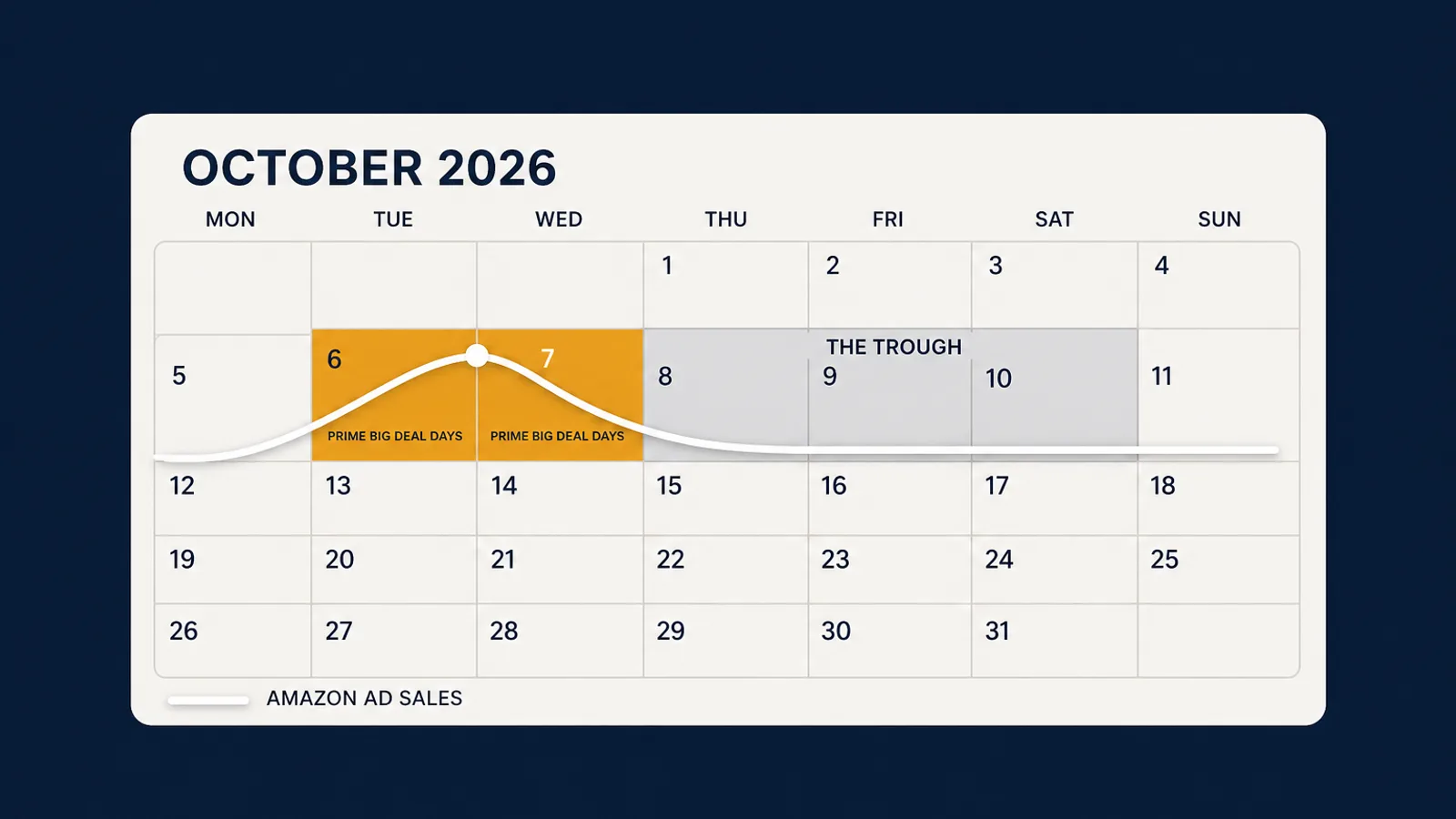
Prime Big Deal Days 2026 runs October 6-7, and most Prime Big Deal Days PPC strategy advice you will read between now and then is some version of "raise your budgets." That advice is not wrong, it is just second in order. The first thing that changes is your break-even ACoS, and it changes the moment your deal price goes live, before you touch a single bid.
Here is the part that catches people. A percentage discount cuts your revenue, but it leaves your fulfillment fee and your landed product cost exactly where they were. Contribution margin falls much faster than price does. So the target ACoS you have been managing toward all quarter, the one that was comfortably profitable on September 30, can be a loss-maker on October 6 without a single competitor outbidding you.
What Amazon has actually confirmed for October 6-7
The event starts at 12:01 a.m. PDT on October 6 and runs 48 hours. It covers 22 countries and more than 35 categories, with dates varying slightly by marketplace.
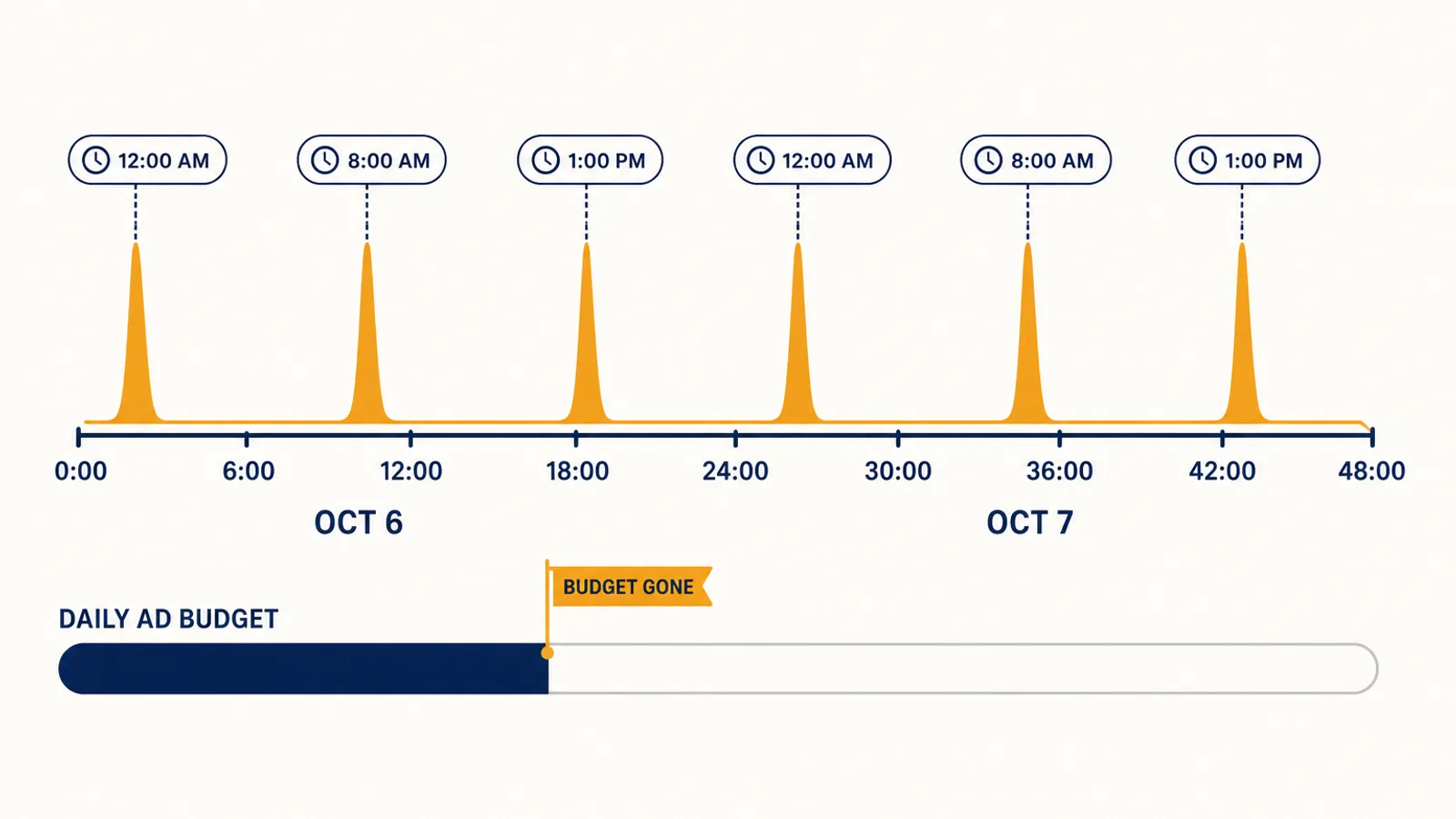
The operationally useful detail is the cadence. Amazon is dropping new deals three times daily, at midnight, 8 a.m. and 1 p.m. PDT. That is not a flat 48 hours of demand, it is three waves per day with troughs between them. If you set a daily budget that looks generous against your normal spend curve, it can still be gone by mid-morning, and the campaign sits dark through the 1 p.m. wave.
For scale: last year's October event drove $9.1 billion in US online spend across October 7-8, up 7.3% year over year, with discounts peaking at 18% off list price. That 18% is the number to hold on to, because it is the input to everything below.
The break-even math your deal price changes
Break-even ACoS is contribution margin per unit divided by sale price. Discount the sale price and both sides of that fraction move, but not by the same amount, because fulfillment and product cost are fixed in dollars.
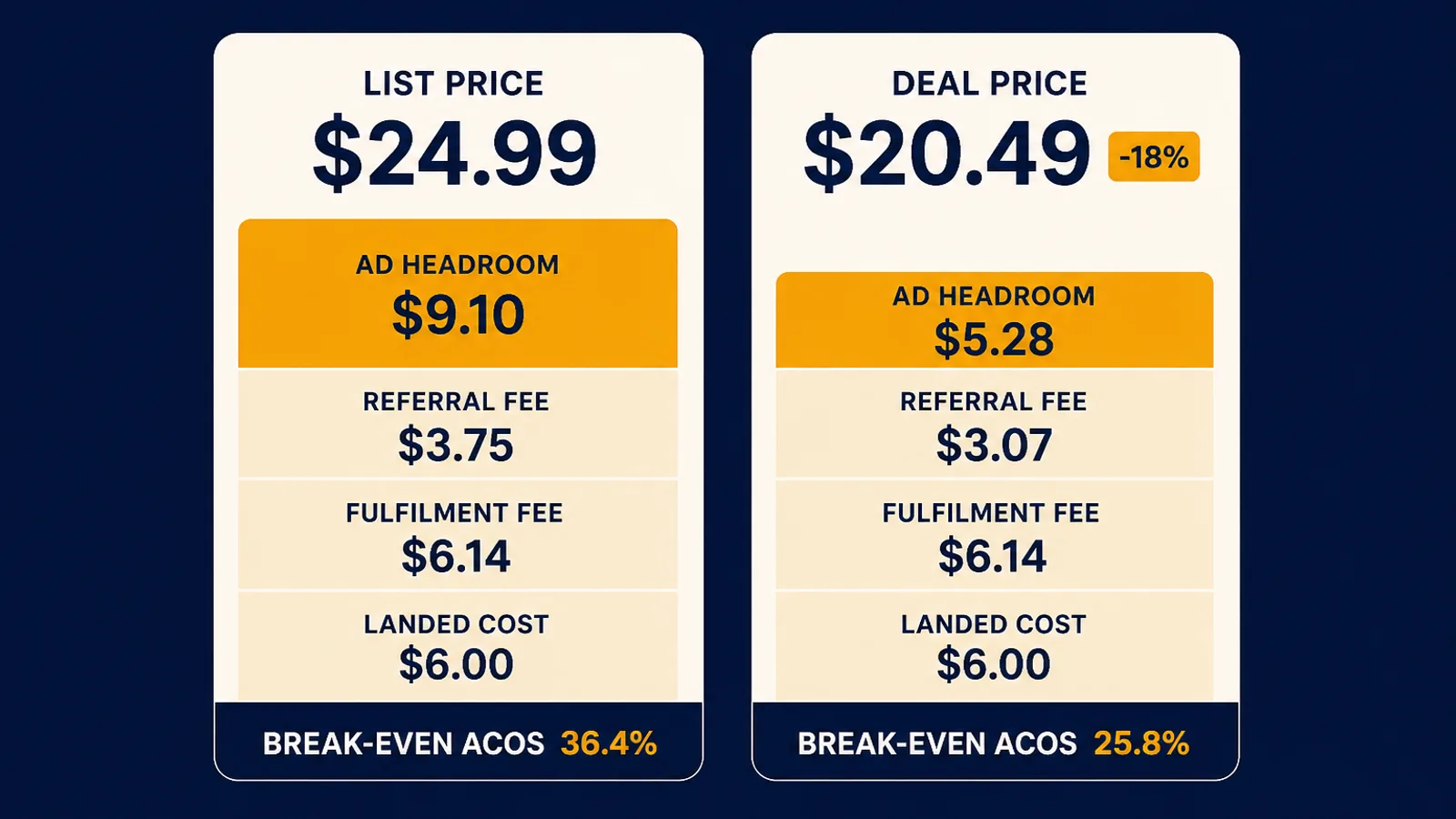
Take a large-standard home goods SKU at $24.99 with a $6.00 landed cost, a 15% referral fee and Amazon's published $6.14 fulfillment rate. Contribution is $9.10, so break-even ACoS is 36.4%. Now run the same unit at an 18% discount, $20.49. The referral fee falls to $3.07, but fulfillment and landed cost do not move at all. Contribution drops to $5.28 and break-even ACoS lands at 25.8%.
An 18% price cut removed 42% of the margin you had available to buy a sale with.
| SKU shape | List price | Break-even at list | Deal price (18% off) | Break-even on deal | Change |
|---|---|---|---|---|---|
| Small standard phone case | $14.99 | 45.0% | $12.29 | 36.3% | -8.7 pts |
| Large standard home goods | $24.99 | 36.4% | $20.49 | 25.8% | -10.6 pts |
| Small bulky | $59.99 | 38.0% | $49.19 | 27.6% | -10.4 pts |
Roughly ten points off the ceiling across three very different unit shapes. Compare that to the two points that Amazon's October 15 peak fulfillment fees take off the same SKUs, a change most sellers do model carefully. The deal discount is a five times larger move in the same direction, and it is the one that usually goes unmodelled.
This does not mean you should bid down to 25.8% and stop. It means you now know where the floor is, so you can choose the overspend deliberately. Buying rank at a 33% ACoS on a deal unit is a defensible decision if you know it costs you seven points of margin and you are buying velocity, review flow and a better organic position going into November. Doing it because 33% was your September target is not a decision at all.
A $45 order changes what winning looks like
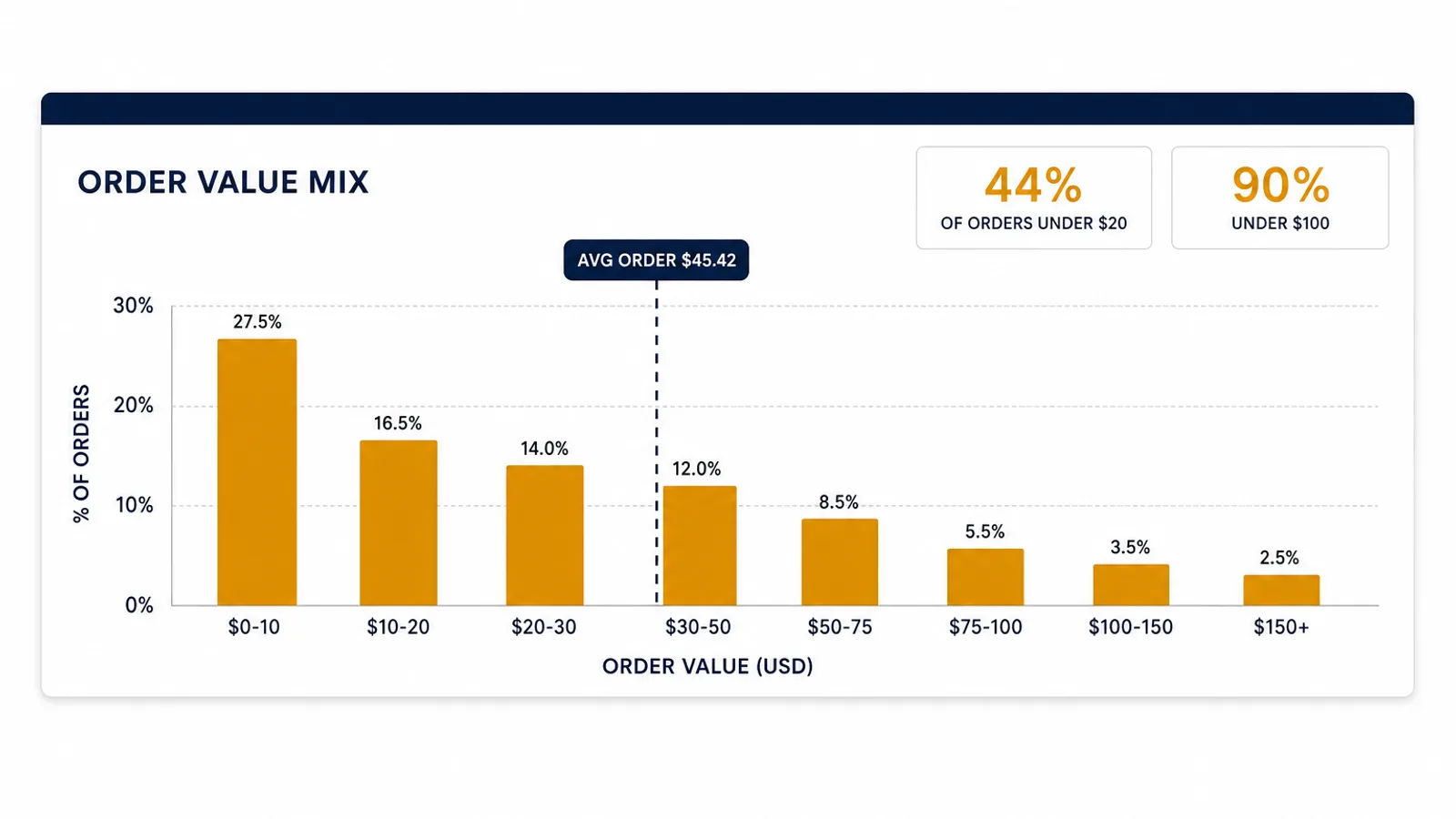
The other input worth modelling is what people actually buy. Numerator surveyed 5,120 verified buyers during last year's October event and found an average spend per order of $45.42, with 44% of orders at $20 or less and 90% under $100.
This is a small-basket, high-frequency event, not a big-ticket one. Which has two consequences for how you bid.
First, against a cross-category average CPC of about $1.13, a low-priced unit has very little room before clicks eat the whole margin, and that is before any event premium. During Prime Day 2026, CPC ran 37.3% above the 14-day pre-event daily baseline. Event premiums are measured against your own recent baseline, not against last year's event, so a 37% step on top of a break-even ceiling that just fell ten points is the actual squeeze.
Second, 53% of shopping households placed two or more orders. A single-unit ACoS read undervalues a customer who comes back twice in 48 hours and again in November. If you sell consumables or anything with a repeat cycle, judge the event on TACoS and on new-to-brand rate rather than on campaign ACoS alone, or you will switch off the campaigns that are working hardest.
The 72 hours after October 7 are where the leak is
Here is the finding that should shape your calendar more than anything else in this post: 45% of deal-event buyers were purchasing items they had been waiting to buy on sale.
That is pulled-forward demand, not incremental demand. Nearly half of what you sell on October 6-7 was going to sell anyway in the following weeks. So October 8 onward is a trough by construction, and it arrives while three things are still working against you.
Your deal badge and strikethrough price are gone, so conversion rate drops for reasons that have nothing to do with your targeting. Your bids, if they are set by any system that reads a trailing conversion window, are still calibrated on two abnormally strong days sitting inside that window. And Amazon's attribution lag means October 6-7 conversions keep landing in your reports for days afterward, which makes the event look progressively better in the dashboard at exactly the moment your live spend is getting less efficient.
The combination is why so many accounts post a great event and a bad week. The money does not leak on deal day. It leaks on October 8, 9 and 10, while everyone is still reading the October 6 report.
The fix is unglamorous and it is a calendar, not a tactic. Decide now what your bids and targets revert to, and revert them on a date rather than on a feeling.
A fifteen-day plan
Now through September 28. Recalculate break-even per SKU at the deal price you are actually submitting, not at list. Set the deal-window target ACoS from that number. This is a spreadsheet job and it takes an afternoon for most catalogues.
September 29 through October 5. Do not launch new campaigns. Anything created this week is still in its learning period on October 6, and you will be paying for its education at peak CPCs. Instead, put budget into campaigns that already carry conversion history, confirm no campaign has an end date that expires mid-event, and take a clean read of your baseline CPC and conversion rate so you have something to measure the premium against.
October 6-7. Budget headroom beats bid heroics. Size daily budgets so a campaign can survive all three deal drops, and check after the 8 a.m. PDT wave rather than at end of day. If you are going to overspend against break-even to buy rank, do it knowingly and on a named list of SKUs.
October 8-10. Revert. Targets go back to list-price break-even, deal-window budget increases come back out. Expect conversion rate to fall and do not read that as a targeting problem.
October 11-14. Now harvest. Quarantine the October 6-7 search-term data before you make negative-keyword decisions, because both the winners and the losers in that window are distorted by a price you are no longer charging.
October 15. Peak fulfillment fees begin and your ceiling moves again, this time by about two points. Recalculate on the SKUs where your target already sits close to break-even.
What to automate and what to decide yourself
The decisions in this post are genuinely yours: which SKUs get a deal, how deep the discount goes, and how much margin you are willing to trade for rank going into November. No tool should make those calls for you.
The work around them is a different matter. Re-deriving break-even for every SKU when prices change, moving hundreds of target bids twice inside ten days, and then reverting them on schedule is exactly the kind of task that gets done well the first time and skipped the second. This is the part worth handing off. Autron takes product cost and margin inputs per SKU, holds a goal-based ACoS or TACoS target against them, and re-optimises bids across Sponsored Products, Sponsored Brands and Sponsored Display on a roughly three-hour cadence, alongside placement adjustments and negative-keyword harvesting. You set the goal for the deal window and the goal for the week after. The revert happens because it is a target change, not because someone remembered.
FAQ
When is Prime Big Deal Days 2026? Prime Big Deal Days 2026 runs October 6-7, starting at 12:01 a.m. PDT on October 6. It is a 48-hour Prime member event across 22 countries and more than 35 categories, with new deals dropping three times a day at midnight, 8 a.m. and 1 p.m. PDT.
How much should I raise my Amazon ad budget for Prime Big Deal Days? Budget is the second lever, not the first. Recalculate break-even ACoS at your deal price first, because an 18% discount can remove 40% or more of your contribution margin per unit. Then give your proven campaigns enough daily budget headroom to survive all three deal drops, since running dry at 8 a.m. PDT costs more than any bid adjustment.
Why does my ACoS get worse in the days after Prime Big Deal Days? Two reasons. Almost half of deal-event buyers are purchasing something they had already decided to buy, so October 8-10 demand is borrowed from, not added to. And any bidding system calibrated on a trailing conversion-rate window still has the abnormally high event days inside it, so bids stay hot into a colder auction.
Do Amazon's 2026 peak fulfillment fees apply during Prime Big Deal Days? No. Peak fulfillment fees run October 15, 2026 to January 14, 2027, which is nine days after the event ends. Your Prime Big Deal Days unit economics use non-peak fees, then your break-even ceiling moves again on October 15.
Should I add negative keywords from Prime Big Deal Days search-term data? Not immediately. Deal-window search terms convert at rates you will not see again for weeks, so both the winners and the losers are distorted. Harvest negatives from your pre-event baseline, quarantine the October 6-7 data, and revisit it once you have a normal week to compare against.
Start with the number, not the budget
Fifteen days is enough time to do this properly, and the highest-value hour you will spend is the first one: work out what your break-even ACoS actually becomes at your deal price, SKU by SKU. Everything downstream, the budgets, the bid changes, the revert date, follows from that number.
If you want a read on where your current targets sit relative to break-even before you commit deal pricing, the free Amazon PPC audit will show you the gap across your catalogue. And if the revert on October 8 is the part you know will slip, start a free Autron trial and set it as a goal change instead of a calendar reminder.