
Amazon PPC in Q4 2026: Traffic Is the Constraint Now, Not Conversion
Prime Day 2026 data shows traffic down 10.3% and conversion up 17.1%. Here is what that inverted funnel means for your Amazon PPC bids and budgets in Q4.
TL;DR: Prime Day 2026 inverted the Amazon funnel: US product page traffic fell 10.3% year over year while unit conversion rose 17.1% to a 20% blended rate, and brands that cut ad spend 8.8% held ROAS flat at 4.78x. Conversion is near its practical ceiling, so the binding constraint in Q4 2026 is buying qualified reach at a defensible CPC. Re-baseline ACoS targets against current conversion rates.

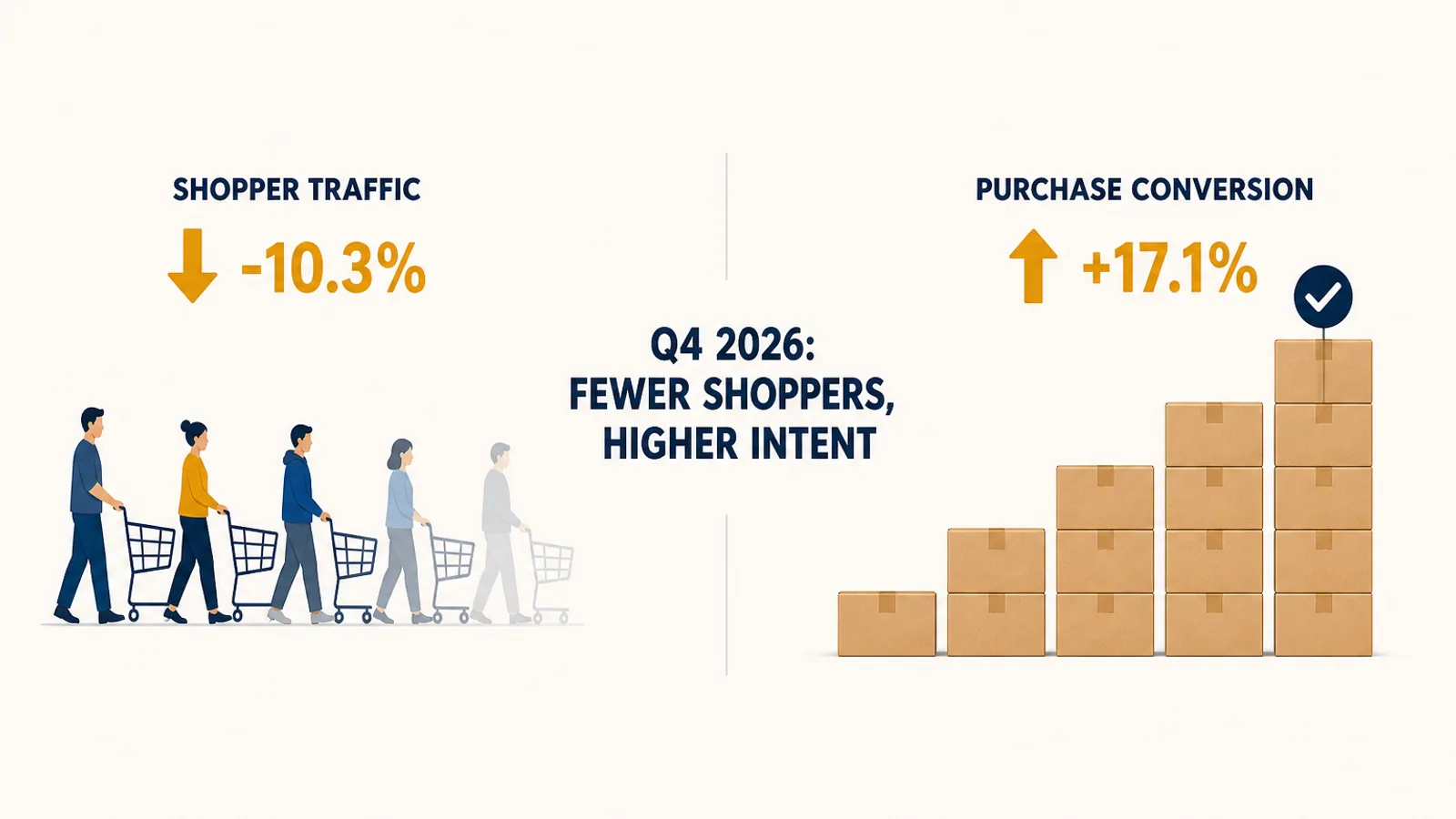
The Amazon PPC playbook most sellers still run assumes traffic is cheap and conversion is the hard part. Buy the clicks, then grind on images, A+ content, reviews, and price until more of those clicks turn into orders. For Q4 2026, that order of operations is backwards.
Prime Day 2026 gave us the cleanest read yet on where the funnel is heading, and the numbers point one way. Fewer shoppers showed up, far more of them bought, and the brands that spent less on ads did roughly as well as the ones that spent more. If you are planning Q4 budgets right now, that inversion should change what you optimize first.
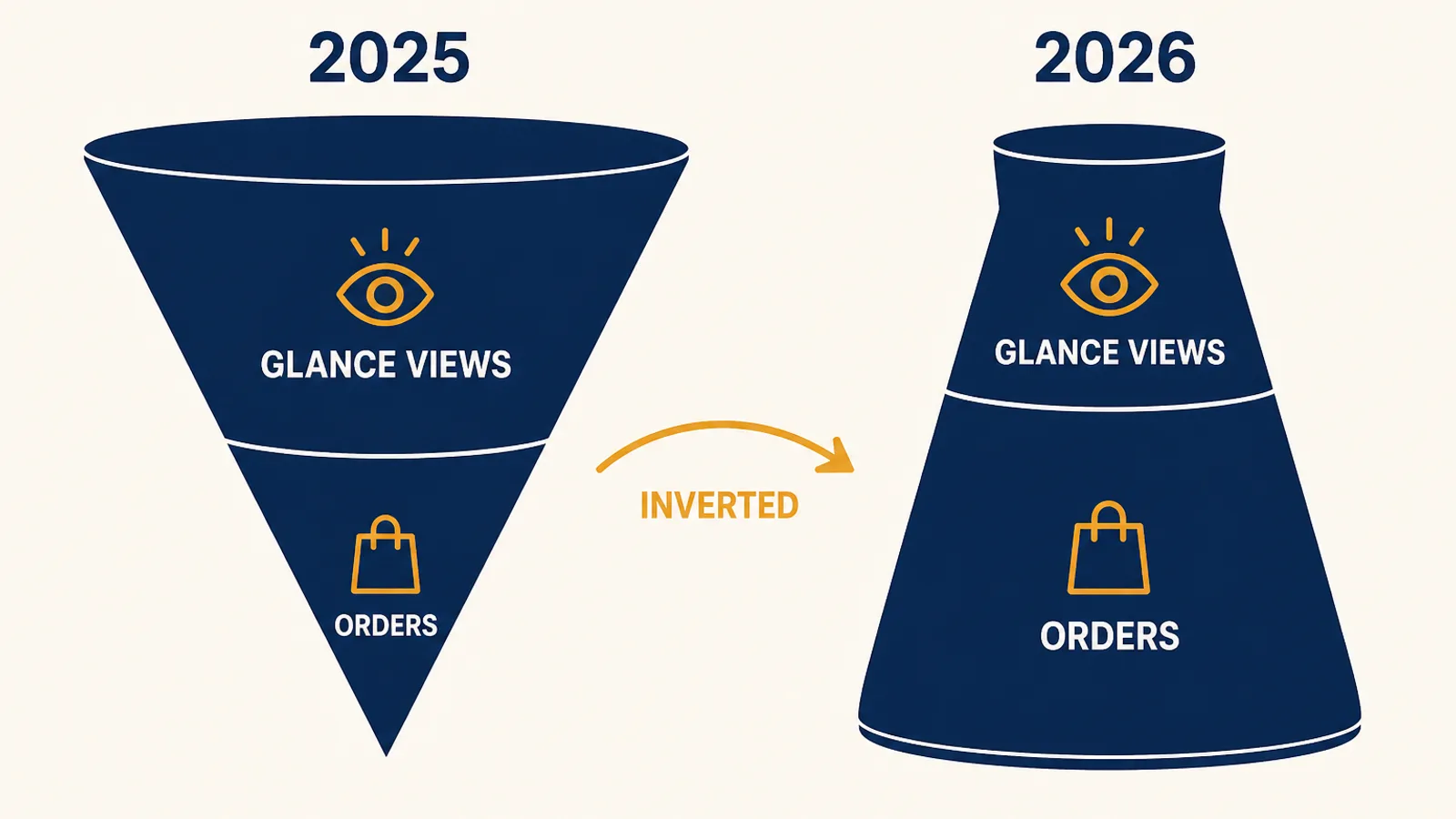
What the Prime Day 2026 numbers actually said
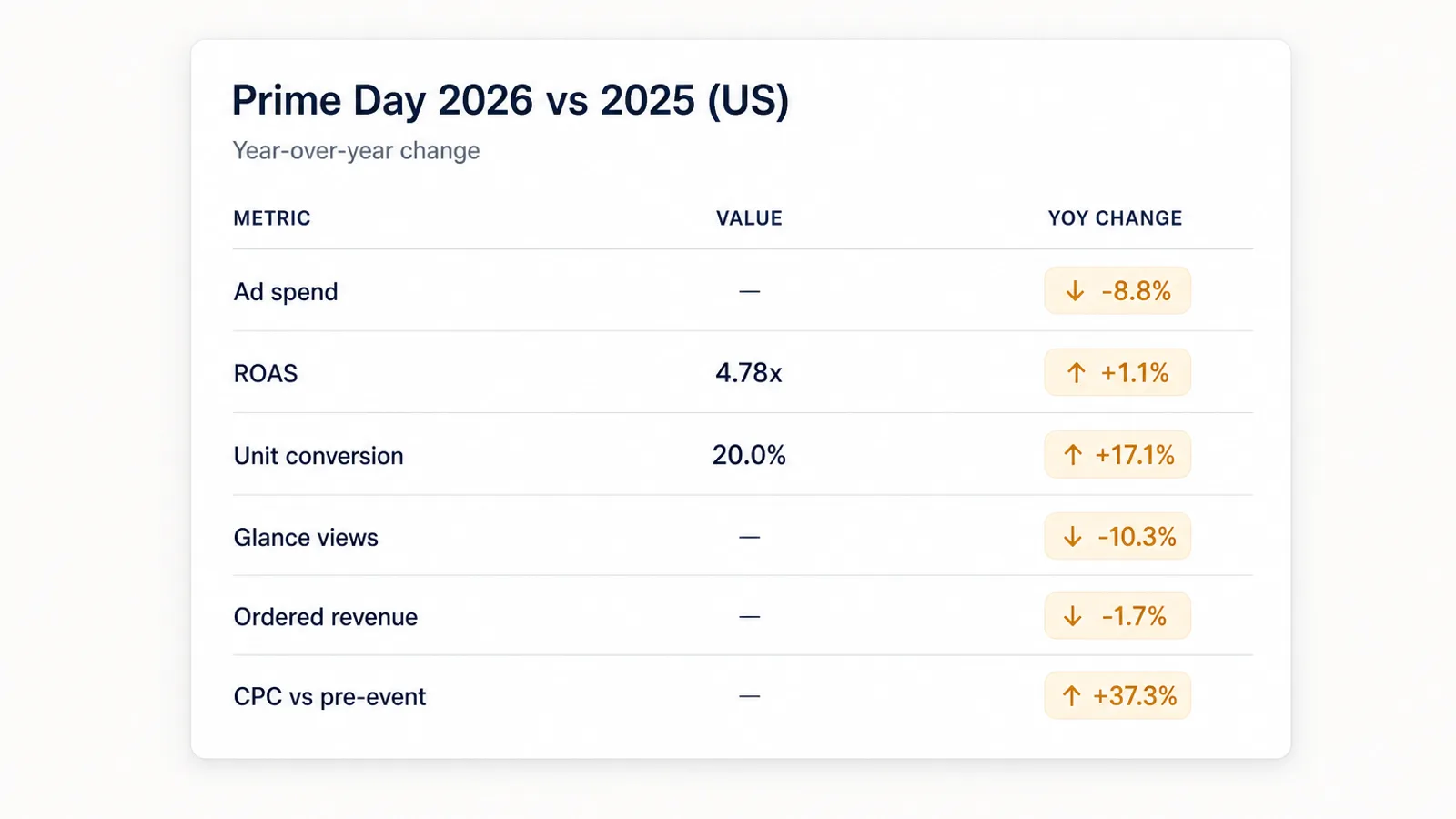
Prime Day 2026 ran June 23 to 26 in the US. On the surface it looked like a soft event: ordered revenue landed 1.7% below Prime Day 2025, and the wider US ecommerce read came in around $26.4 billion across the event window. Underneath, the mix had shifted hard.
Product page traffic, measured as glance views, fell 10.3% year over year. Unit conversion went the other way, up 17.1% to a 20.0% blended rate. Unit volume still grew 4.9%. Average selling price dropped 6.3%, which is most of the revenue gap.
The advertising side is the part worth staring at. Brands cut total ad investment 8.8% year over year and ROAS barely moved, 4.78x against 4.73x the year before. Spending less did not cost them efficiency, and it did not cost them much revenue either. That is not what a demand collapse looks like. That is a funnel where each session is worth substantially more than it used to be.
CPC is the detail most planning decks will get wrong. Year over year it was essentially flat, down 0.7%. Against the 14-day pre-event daily baseline it ran 37.3% higher. Both numbers are true, and only the second one matters when you are sizing a Q4 budget against your own current spend.
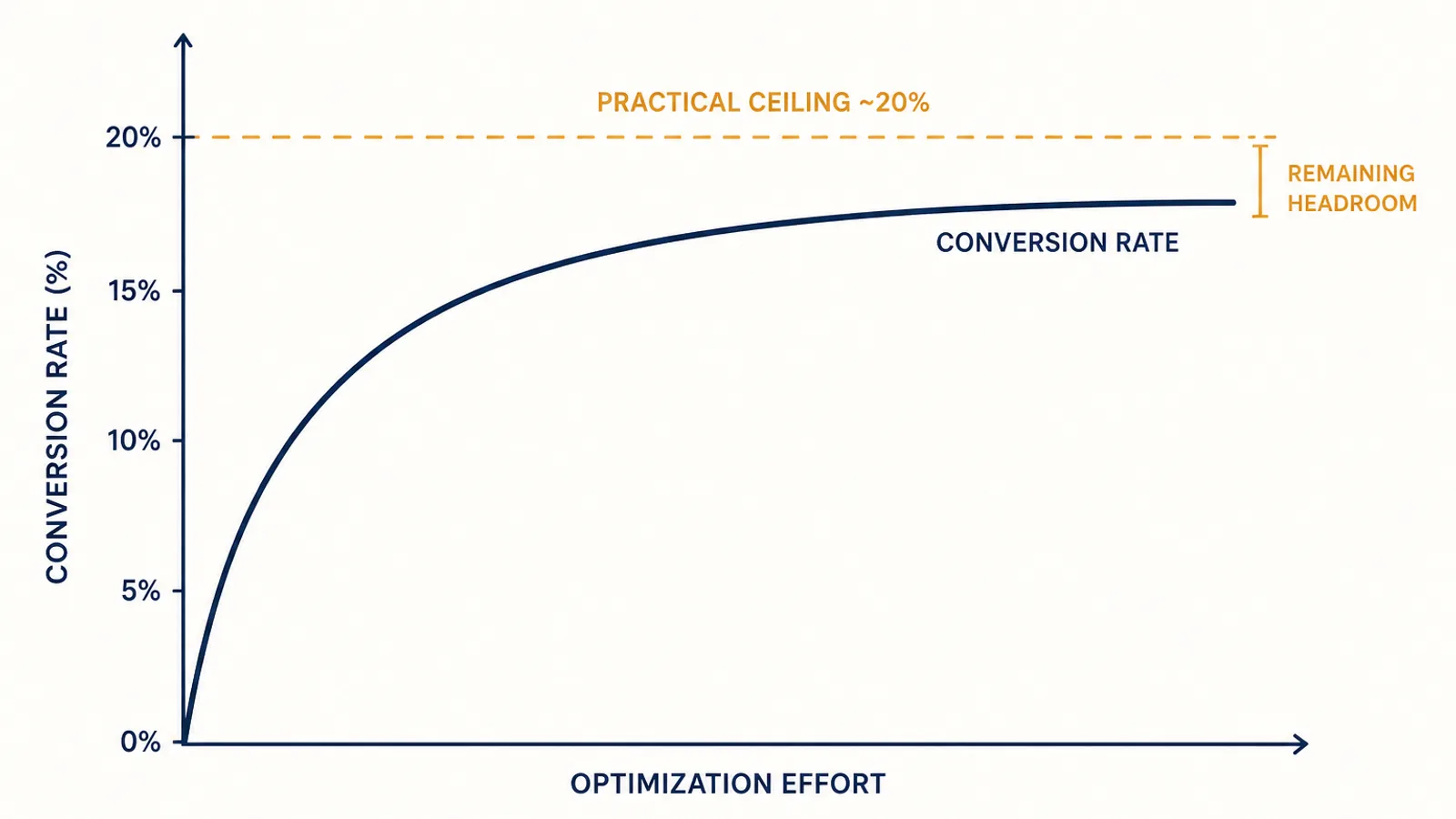
Conversion optimization is running out of road
A 20% blended conversion rate is a high number for a four-day retail event. It is high enough that the analysis behind these figures described it as close to a practical ceiling, and that framing is the actionable part.
Think about where your marginal effort goes. If your event conversion rate is 8%, there is obvious room: better main image, tighter title, more reviews, a sharper coupon. Every point you add compounds across all your paid traffic. If your event conversion rate is already 20%, the same work buys you a fraction of a point. The shoppers arriving on your page during a peak event have largely already decided; they are validating, not exploring.
The likely mechanism is the assistant layer. Amazon retired Rufus and folded it into Alexa for Shopping in May 2026, putting a conversational assistant directly in the main search bar for every signed-in US customer. When an assistant does the comparison work, the shopper visits three product pages instead of eight. Glance views drop. Conversion rises. Neither number is telling you demand changed.
That compression is why glance-view volume is becoming a weaker growth signal. You can no longer read a traffic decline as a demand problem, and you can no longer read a conversion spike as a listing win.
Why traffic is the binding constraint for Amazon PPC in Q4 2026
If conversion is near its ceiling and sessions are scarcer, the growth lever moves upstream. In Q4 2026, the question is not "how do I convert more of my traffic," it is "how do I buy more qualified impressions at a CPC I can defend."
That is a harder problem, and the competition for it is intensifying. Amazon's advertising services revenue reached $19.8 billion in Q2 2026, up 26% year over year. Ad revenue growing at 26% while glance views shrink means more spend chasing fewer sessions. Auction pressure in Q4 is going to be worse than the flat year-over-year CPC suggests.
There is a second-order effect worth noting. Sponsored Products took 88% of Prime Day event spend, while Sponsored Display spend fell 70% and Sponsored Brands fell 25% year over year. Sellers consolidated into the format with the clearest attribution. That is a rational move under budget pressure, but it also means the upper-funnel formats got cheaper at exactly the moment upper-funnel reach became the scarce input. Worth testing rather than assuming.
Four things to change before Q4
Re-baseline your ACoS target against your current conversion rate. This is the one that costs sellers the most money and gets skipped the most. Your break-even bid is a function of conversion rate and margin. If conversion is up 17% and you are still running last year's ACoS target, you are underbidding by roughly that margin into the most competitive quarter of the year. Recompute the target from current numbers, do not carry it forward.
Plan CPC against your own baseline, not last year's event. The 37.3% premium over pre-event baseline is the number that predicts your Q4 spend curve. Pull your own 14-day trailing CPC by campaign now, before the ramp, so you have a real reference point when bids start climbing in November.
Shift optimization effort from conversion to query selection. With conversion near ceiling, the highest-leverage work is which searches you appear on. That means search-term harvesting on a tighter loop, negative keywords applied faster, and a real look at where your reach is capped by budget rather than by bid. If your search-term reports are getting reviewed monthly, that cadence is now too slow for a season where the auction reprices weekly.
Check your format mix instead of defaulting to Sponsored Products. Everyone crowding into SP is what makes SP expensive. If Sponsored Display inventory is cheap because 70% of last year's spend left it, that is a testable arbitrage, especially for retargeting the shoppers who did view your page and did not buy.

The operational problem underneath all of this
Every recommendation above is a recalculation, not an insight. Re-derive break-even bids from current conversion. Reprice against a moving baseline. Re-harvest search terms weekly instead of monthly. Re-check format mix as the auction shifts.
None of that is hard. It is just relentless, and it has to happen across every campaign, every ad group, and every ASIN, in a quarter when you are also dealing with inventory, deals, and customer service. This is exactly the work that quietly does not get done in November, and the cost of skipping it is invisible until January.
That is the gap Autron is built for. Autron Pro runs the bid, placement, dayparting and negative-keyword loop against your goal on a daily cadence, using Ads API and SP-API data together, so break-even math gets re-derived from current conversion rates instead of a stale assumption. If you would rather ask questions than delegate the loop, Autron Agent reads the same data conversationally, including your search query performance and profitability, and can take permissioned actions on your campaigns.
If you just want to know where your Q4 exposure is, the free PPC audit will show you which campaigns are budget-capped and where wasted spend is concentrated before the ramp starts.
FAQ
What did Prime Day 2026 data show about Amazon PPC? In the US, product page traffic fell 10.3% year over year while unit conversion rose 17.1% to a 20.0% blended rate. Brands spent 8.8% less on ads and still held ROAS almost flat at 4.78x versus 4.73x, and ordered revenue finished only 1.7% below Prime Day 2025.
Why is traffic the constraint for Amazon PPC in Q4 2026? Conversion rates are already near a practical ceiling for a high-intent shopping event, so squeezing more conversions out of the same sessions has little room left. Fewer shoppers reached more product pages ready to buy, which means the growth lever is buying additional qualified impressions at a defensible CPC rather than optimizing conversion further.
Should I lower my ACoS target for Q4 2026? Not automatically. A higher conversion rate means each click is worth more, so the same ACoS target now supports a higher bid. Re-baseline the target against your current conversion rate and margin instead of carrying over last year's number, or you will systematically underbid into a season when reach is scarce.
Did CPCs actually fall during Prime Day 2026? Year over year CPC was almost flat, down 0.7%, but it ran 37.3% above the 14-day pre-event daily baseline. The event premium is still real even when the annual comparison looks calm, so Q4 budgets should be planned against your own pre-event baseline rather than last year's event CPC.
How is Alexa for Shopping changing Amazon PPC? Amazon replaced Rufus with Alexa for Shopping in May 2026, putting an AI assistant in the main search bar. Analysts attribute part of the conversion lift to assistant-led recommendations, which compress the browse stage: shoppers view fewer product pages before buying, so ad impressions matter more and glance-view volume becomes a weaker growth signal.